
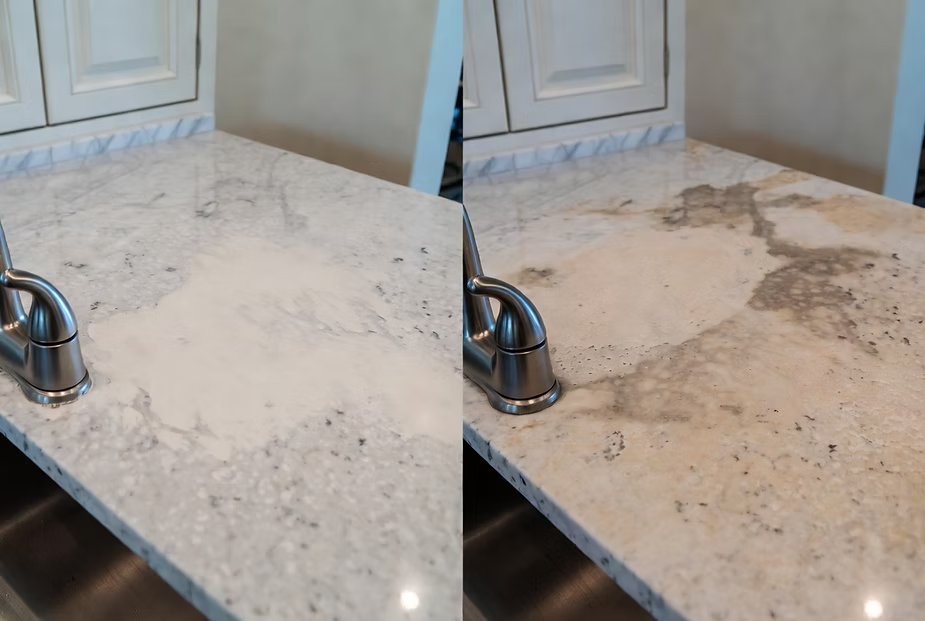
Marble Etching vs. Staining: What’s the Difference?
Marble is valued for its natural patterns, smooth finish and timeless appearance. Whether installed on floors, countertops, bathroom vanities or other surfaces, marble adds an elegant touch to residential and commercial properties. However, everyday use can leave marks that affect its appearance.
Some marks appear as dark spots, while others look like cloudy patches, white rings or dull areas. Although these problems may look similar, they are not always caused by the same issue.
Understanding marble etching vs. staining is important because each problem requires a different treatment. A stain occurs when a substance penetrates the stone and causes discoloration, while etching is surface damage caused by a chemical reaction, usually involving acidic substances.
In this guide, we explain how to identify marble etching and staining, what causes them, how to treat each problem and when professional marble restoration may be necessary.
What Is Marble Etching?
Marble etching is a type of surface damage that occurs when acidic substances react with the calcium carbonate in marble. This chemical reaction affects the stone’s surface and can remove some of its polished finish.
Unlike an ordinary stain, etching does not simply involve a liquid soaking into the stone. It changes the surface itself.
Common signs of marble etching include:
- Dull or cloudy patches on polished marble
- White or lighter-colored rings around glasses
- Loss of shine in specific areas
- Marks that become more noticeable under direct lighting
- Slightly rough or uneven areas compared with the surrounding finish
For example, if lemon juice, vinegar or wine spills onto a polished marble countertop, it may leave a dull mark even after the liquid has been cleaned away.
These marble dull spots are often mistaken for stains, but they may actually be etch marks that require polishing or refinishing.
What Causes Marble Etching?
Marble contains calcium carbonate, which makes it sensitive to many acidic substances. When these substances contact the surface, they can react with the stone and affect its finish.
Some common causes include:
1. Acidic Food and Beverages
Everyday kitchen products can damage marble if they remain on the surface.
Examples include:
- Lemon and orange juice
- Vinegar
- Wine
- Tomato-based sauces
- Certain soft drinks
- Other acidic food products
Even a small spill can affect a polished marble surface, depending on the substance and exposure.
2. Incorrect Cleaning Products
Not every household cleaner is suitable for natural stone. Some bathroom cleaners, descaling products and multipurpose solutions contain acids that can damage marble.
Using vinegar or lemon-based cleaning solutions is particularly risky because these substances can dull the polished finish.
For routine marble cleaning, choose a pH-neutral cleaner specifically formulated for natural stone.
3. Everyday Household Use
Marble countertops and floors are exposed to regular activities that can increase the risk of surface damage.
For example, placing beverage glasses directly on a marble table, preparing acidic foods on an unprotected countertop or allowing spills to remain unattended can contribute to etching.
What Is Marble Staining?
Marble staining occurs when a substance penetrates the stone and causes discoloration. Because marble is naturally porous, certain liquids and oils can enter its structure, particularly when the surface is not adequately protected.
Unlike etching, staining generally changes the color of the affected area without necessarily damaging the polished finish.
Common signs of marble staining include:
- Dark patches or spots
- Brown, yellow or reddish discoloration
- Oil marks on countertops
- Coffee or tea stains
- Rust-colored marks near metal objects
- Discoloration that remains visible after surface cleaning
For example, cooking oil spilled on a marble kitchen countertop may penetrate the stone and create a darker area.
The correct treatment depends on the substance responsible for the stain and how deeply it has penetrated the marble.
What Causes Marble Stains?
Several everyday substances can cause discoloration on marble floors and countertops.
1. Oil and Grease
Cooking oil, butter, cosmetics and greasy substances can penetrate porous marble and leave dark marks.
Kitchen countertops are particularly exposed to these materials.
2. Coffee, Tea and Food
Coffee, tea, sauces and other food products can leave visible discoloration when spills are not cleaned promptly.
Some acidic beverages, such as wine, may cause both staining and etching.
3. Rust and Metal Deposits
Metal furniture fittings, decorative objects and other iron-containing materials can leave orange or brown marks on marble.
Rust stains may require specialized treatment designed for natural stone.
4. Cosmetics and Personal Care Products
Makeup, lotions, hair products and other bathroom items can leave marks on marble vanities and countertops.
Using trays and protective accessories can help reduce direct contact with the stone.
Marble Etching vs. Staining: Key Differences
Although etching and staining can look similar, their causes and treatments are different.
| Feature | Marble Etching | Marble Staining |
| Main cause | Chemical reaction with the stone | Substance penetrating the stone |
| Appearance | Dull, cloudy or lighter patches | Dark or colored discoloration |
| Surface finish | Polished finish may become dull | Finish may remain unchanged |
| Common causes | Vinegar, citrus juice and acidic cleaners | Oil, coffee, cosmetics and rust |
| Main treatment | Polishing, honing or refinishing | Appropriate stain removal or poultice treatment |
| Does sealing prevent it? | No, sealing does not prevent acid etching | A suitable sealer may reduce absorption |
One important point is that a single spill can cause both problems. For example, red wine may discolor marble while its acidity also affects the polished surface.
Correctly identifying the damage is therefore important before selecting a treatment.
How to Identify Marble Etching and Staining
Before attempting to clean a damaged marble surface, examine the affected area carefully.
The following observations can help identify the problem.
1. Check the Appearance
Look at the affected area under good lighting.
Etching commonly appears as a dull, cloudy or lighter patch where the surrounding polished marble remains shiny.
Staining is more likely to appear as a dark or colored area within the stone.
2. Observe the Surface Finish
Gently compare the affected area with the surrounding marble.
An etched area may feel slightly rougher or less smooth because the surface finish has been affected.
A stain may change the color while leaving the surface texture relatively unchanged.
Avoid scratching or aggressively rubbing the area during inspection.
3. Consider What Caused the Mark
Think about what was recently placed or spilled on the surface.
- A dull ring beneath a drinking glass may indicate etching.
- A dark patch beneath a cooking oil container may indicate staining.
- A mark near a metal object may be rust-related.
- A dull patch near a food preparation area may be related to acidic spills.
These observations are useful clues, but they are not a definitive diagnosis. Some marks involve more than one type of damage.
How to Treat Marble Etching
Because etching affects the surface finish, ordinary cleaning products generally cannot restore the original polish.
The appropriate treatment depends on the depth and extent of the damage.
1. Light Etching
Minor etch marks on polished marble may respond to a suitable marble polishing compound.
However, the product must be compatible with the stone and its finish. Always follow the manufacturer’s instructions and test it in an inconspicuous area first.
2. Moderate Etching
More noticeable marble surface damage may require professional polishing.
Stone restoration specialists can use appropriate polishing methods to improve the affected area and blend the finish with the surrounding marble.
3. Deep or Widespread Etching
Deep etching or extensive dull areas may require honing and refinishing.
Honing removes a controlled amount of the damaged surface to create a more consistent finish. Polishing can then be performed when a glossy appearance is desired.
Attempting aggressive DIY repairs can create uneven surfaces, scratches or visible differences in shine.
How to Remove Marble Stains
Stain removal requires a different approach because the discoloration comes from material that has penetrated the stone.
The treatment should be selected according to the type of stain.
1. Clean Fresh Spills Immediately
Blot fresh spills using a clean, soft cloth. Avoid rubbing because this can spread the substance.
Use a pH-neutral stone cleaner when appropriate, following the product instructions.
2. Consider a Professional Poultice Treatment
A poultice is an absorbent material combined with a suitable cleaning agent. It is used to help draw certain penetrating stains out of porous stone.
Different stains require different formulations, so the correct product must be selected carefully.
A poultice may help with certain oil-based, organic or other stains, but it will not repair an etched marble surface.
3. Seek Professional Help for Persistent Stains
Old, deep or unidentified stains may require specialized treatment.
Professional assessment is particularly important when the marble has valuable finishes, extensive discoloration or a combination of staining and etching.
How to Prevent Marble Etching and Staining
Regular maintenance can help reduce the risk of both surface damage and discoloration.
Consider these practical precautions:
- Clean spills promptly: Blot wine, coffee, juice, oil and other substances as soon as possible.
- Use pH-neutral cleaners: Choose products specifically formulated for natural stone.
- Avoid acidic cleaning products: Do not use vinegar, lemon juice or conventional acidic bathroom cleaners.
- Use coasters and trays: Protect marble countertops and tables from beverages, cosmetics and household products.
- Use protective mats: Place suitable mats in high-traffic areas to reduce dirt and surface abrasion.
- Maintain appropriate sealing: Ask a stone care professional whether your marble needs an impregnating sealer.
- Schedule professional maintenance: Periodic inspections can help identify surface problems before they become more extensive.
Remember that sealing may reduce the absorption of certain liquids, but it does not make marble completely stain-proof or protect it from acid etching.
When Should You Hire a Professional Marble Restoration Service?
Some marble problems can be managed with routine cleaning, but others require specialized equipment and experience.
Consider professional marble restoration when:
- Marble floors have widespread dull spots.
- Acidic spills have damaged the polished finish.
- Deep scratches or etch marks remain visible.
- Stains do not respond to appropriate cleaning.
- The surface has uneven shine or visible wear.
- Previous DIY cleaning attempts have made the damage worse.
Stone Cleaning Service provides marble cleaning, sealing and restoration services, including diamond polishing and powder polishing to address surface damage, deep scratches, etch marks and dull areas.
Property owners in Torrance, Los Angeles and Orange County can explore the company’s marble cleaning and restoration services to learn more about available care and restoration options.
Frequently Asked Questions
1. What is the difference between marble etching and staining?
Marble etching is surface damage caused by a chemical reaction, commonly involving acidic substances. Staining occurs when a liquid or other substance penetrates the stone and causes discoloration.
2. Can marble etching be removed?
Yes. Depending on its severity, etching may be improved through polishing, honing or professional refinishing. Ordinary cleaning alone generally cannot restore an etched polished surface.
3. Why does my marble have dull spots?
Marble dull spots may be caused by acid etching, scratches, surface wear, residue or an unsuitable cleaning product. The affected area should be examined to identify the actual cause before treatment.
4. Does marble sealing prevent etching?
No. A suitable impregnating sealer can reduce the absorption of certain liquids, helping limit some stains. However, it does not prevent acidic substances from reacting with the marble surface.
5. Can vinegar remove stains from marble?
Vinegar should not be used on marble. Its acidity can react with the stone and cause etching, making the surface dull or damaged.
6. Will a poultice remove marble etching?
No. A poultice is designed to help draw certain penetrating stains out of stone. Etching affects the surface finish and generally requires polishing or refinishing.
7. Can marble have both etching and staining?
Yes. Certain substances, such as wine, can cause discoloration while also reacting with the marble surface. In these situations, stain removal and surface restoration may both be necessary.