
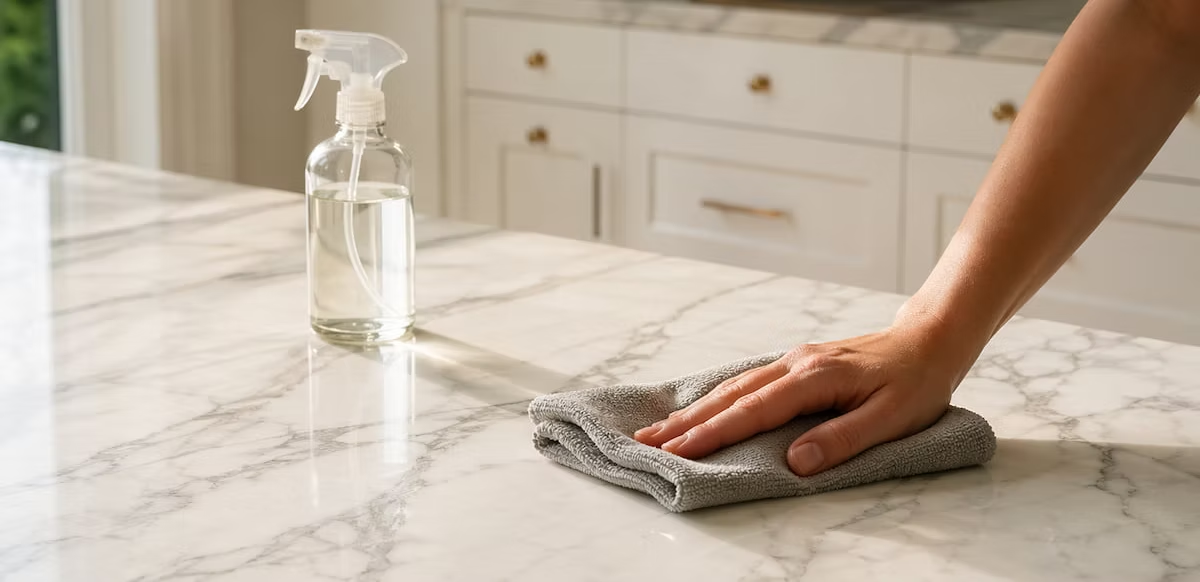
How to Remove Stains from Marble Floors and Countertops
Marble floors and countertops bring a timeless, elegant appearance to residential and commercial spaces. However, marble is a natural stone that requires proper care because certain liquids, oils and everyday substances can leave visible marks. Coffee spills, cooking grease, wine and other materials can penetrate the stone and create stubborn discoloration.
Understanding the right approach to marble stain removal can help protect your surfaces and maintain their natural appearance. Different stains require different treatments, and using unsuitable cleaning products may cause additional damage.
In this guide, we explain how to identify common marble stains, choose appropriate cleaning methods and prevent future discoloration on marble floors and countertops.
Why Do Marble Floors and Countertops Get Stained?
Marble is a natural stone with a porous structure. Although its appearance is smooth, certain substances can penetrate its surface, particularly when the stone is not adequately protected.
Common causes of marble floor stains and countertop discoloration include:
- Coffee and tea: These beverages can leave brown marks when spills are not cleaned promptly.
- Cooking oil and grease: Oily substances can penetrate marble and create dark patches.
- Wine and fruit juice: Certain beverages may cause discoloration or surface etching.
- Cosmetics: Makeup, lotions and personal care products can leave marks on bathroom countertops.
- Rust: Metal objects can create orange or brown discoloration.
- Dirt and spills: Regular foot traffic can contribute to surface buildup and staining.
Identifying the source of the stain is the first step toward choosing an appropriate cleaning treatment.
How to Remove Stains from Marble Floors and Countertops
The correct cleaning method depends on the type of stain and how deeply it has penetrated the stone. Before applying any cleaning product, test it on a small, inconspicuous area and follow the manufacturer’s instructions.
1. Remove Fresh Food and Beverage Stains
Coffee, tea, wine and food spills are common causes of marble discoloration.
Follow these steps:
- Blot the spill immediately with a clean, soft cloth.
- Avoid rubbing, as this can spread the substance.
- Apply a pH-neutral cleaner specifically designed for natural stone.
- Wipe gently using a microfiber cloth.
- Rinse if required by the cleaner’s instructions and dry the surface.
For older or deeper stains, ordinary surface cleaning may not be sufficient.
2. Treat Oil and Grease Stains
Cooking oil, butter, cosmetics and greasy substances can penetrate marble and create dark spots.
For effective marble stain removal:
- Remove excess oil using an absorbent cloth.
- Avoid scrubbing the affected area.
- Use a marble-safe degreasing cleaner according to its instructions.
- If the stain remains, consult a stone restoration professional about an appropriate poultice treatment.
Avoid using ordinary kitchen degreasers unless they are approved for natural stone.
3. Address Rust Stains Carefully
Rust stains can appear when metal objects, furniture fittings or iron-containing materials remain in contact with marble.
These marks can be difficult to remove because marble is sensitive to acidic chemicals.
Avoid vinegar, lemon juice and conventional rust removers. They can etch or damage the marble surface. Persistent rust stains should be assessed by a natural stone cleaning specialist.
4. Clean Organic Stains
Food, coffee, tea and other organic materials may leave brown or pinkish discoloration.
For fresh spills, blot the affected area and clean it with a suitable pH-neutral stone cleaner. Older stains may require a professional poultice treatment.
The treatment should always be selected according to the substance causing the discoloration.
What Is a Poultice Treatment for Marble Stain Removal?
A poultice is an absorbent material combined with a suitable cleaning agent. It is used to help draw certain stains out of porous natural stone.
Professional stone restoration specialists may use poultice treatments for selected oil-based, organic and other penetrating stains.
The general process involves:
- Identifying the type of stain.
- Selecting a compatible poultice product.
- Applying it to the affected area according to product instructions.
- Allowing the treatment to work for the recommended period.
- Removing the material and evaluating the result.
Not every stain responds to poultice treatment. The wrong product or application method may damage the stone, so professional advice is recommended for stubborn stains.
Marble Stains vs. Marble Etching: Understanding the Difference
Staining and etching are two different problems that can affect marble floors and countertops.
Marble staining happens when a substance penetrates the stone and causes discoloration. Depending on the source, marks may appear dark, brown, yellow or in other colors.
Marble etching occurs when acidic substances react with the calcium carbonate in marble. This reaction can dull the polished finish and leave light marks or rough-looking patches.
Common causes of marble etching include:
- Lemon juice and citrus fruits
- Vinegar-based cleaners
- Wine and acidic beverages
- Certain household cleaning products
Cleaning alone cannot restore an etched polished surface. Depending on the damage, professional honing or polishing may be required.
Common Mistakes to Avoid During Marble Cleaning
Using the wrong cleaning products can make marble stains and surface damage worse.
Avoid these common mistakes:
- Using vinegar or lemon juice: Acidic substances can damage marble through etching.
- Using abrasive scrubbers: Rough pads and scouring powders may scratch the surface.
- Applying harsh bathroom cleaners: Some contain chemicals unsuitable for natural stone.
- Ignoring spills: Certain substances can penetrate marble if left unattended.
- Using excessive water: Standing water may contribute to moisture-related problems.
- Trying random stain removers: Products designed for other surfaces may harm marble.
For routine marble cleaning, choose a pH-neutral product specifically formulated for natural stone.
How to Prevent Marble Floor Stains
Preventive maintenance can help preserve the appearance of marble floors and countertops.
Follow these practical recommendations:
- Clean spills promptly: Blot coffee, wine, oil and other substances as soon as possible.
- Use entrance mats: Reduce dirt and debris entering your property.
- Protect countertops: Use coasters, trays and suitable protective accessories.
- Choose stone-safe cleaners: Avoid acidic and abrasive household products.
- Maintain proper sealing: Ask a stone care professional whether your marble needs sealing.
- Schedule regular maintenance: Professional inspections can help identify potential problems early.
Remember that sealing can reduce the absorption of certain substances, but it does not make marble completely stain-proof or protect it from acid etching.
When Should You Hire a Professional Marble Cleaning Service?
Some minor stains can be managed with appropriate cleaning products. However, deeper discoloration and surface damage may require specialized treatment.
Consider professional marble cleaning when:
- Stains remain after appropriate cleaning.
- Large sections of marble have become discolored.
- Oil or grease has penetrated deeply into the stone.
- Rust marks remain visible.
- Marble floors have lost their original shine.
- The surface has scratches, etching or uneven patches.
- Previous cleaning attempts have caused additional damage.
A professional stone care specialist can assess the condition of the marble and recommend suitable treatment, such as deep cleaning, stain removal, honing, polishing or sealing.
For property owners seeking professional marble cleaning and restoration services, working with experienced natural stone specialists can help maintain the beauty and longevity of marble surfaces.
Frequently Asked Questions About Marble Stain Removal
1. How do you remove stains from marble naturally?
Start by blotting fresh spills and using a pH-neutral cleaner formulated for natural stone. Avoid vinegar, lemon juice and other acidic home remedies because they can damage marble.
2. Can old stains be removed from marble floors?
Some old stains can be treated using specialized cleaning products or professional poultice treatments. Results depend on the stain type, depth and condition of the marble.
3. Does baking soda remove stains from marble?
Baking soda is sometimes used in professionally formulated poultice applications, but applying homemade mixtures without understanding the stone and stain can cause problems. Use products specifically recommended for marble.
4. How often should marble floors be professionally cleaned?
The frequency depends on foot traffic, surface condition and maintenance practices. High-traffic commercial spaces may need more frequent professional attention than residential areas.
5. Does marble sealing prevent stains?
A suitable impregnating sealer can reduce the absorption of certain liquids and make maintenance easier. However, it does not make marble completely stain-proof or prevent etching from acidic substances.